The Two-Second Problem That Changed Computing
How debugging lag built the internet
I had this dream about something that happened in 1968.
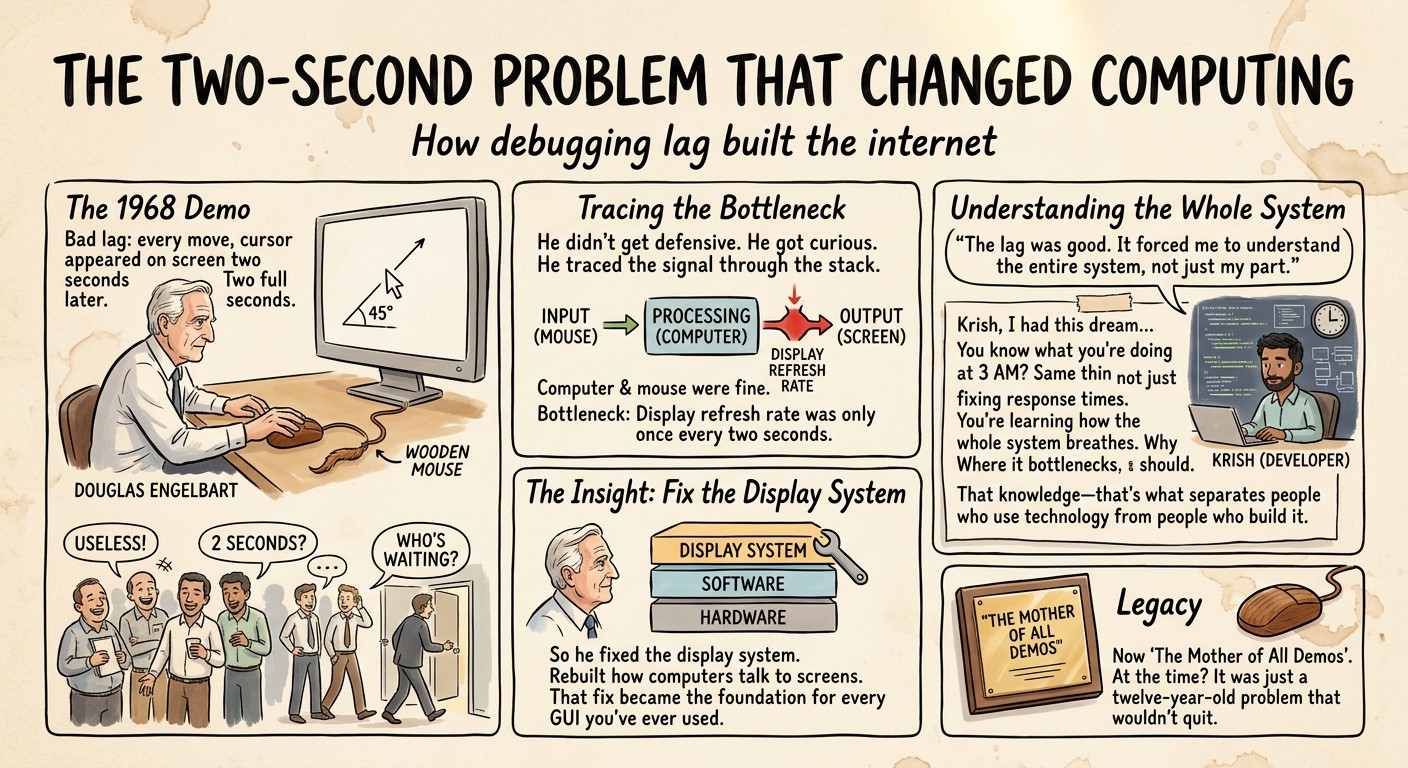
Douglas Engelbart was demoing the first computer mouse to a room full of engineers. Except there was lag. Bad lag. Every time he moved the mouse, the cursor appeared on screen two seconds later. Two full seconds.
The engineers in the room started laughing. Some walked out. They thought it was useless—who would wait two seconds for a cursor to move?
But Engelbart didn't get defensive. He got curious. He traced the problem through the entire stack. The mouse was sending signals fine. The computer was receiving them fine. But the display refresh rate—that was the bottleneck. The screen could only update once every two seconds.
So he didn't fix the mouse. He fixed the display system. He rebuilt how computers talk to screens. That fix became the foundation for every GUI you've ever used.
Here's the thing that got me: Engelbart said later that the lag was actually good. Because it forced him to understand the entire system, not just his part of it. He had to trace the signal all the way through—from hardware to software to display. That's how he saw what no one else did.
You know what you're doing at 3 AM? Same thing. You're not just fixing response times. You're learning how the whole system breathes. Where it bottlenecks. Why two calls fire when one should. That knowledge—that's what separates people who use technology from people who build it.
Engelbart's mouse demo is called 'The Mother of All Demos' now. But at the time? It was just a twelve-year-old problem that wouldn't quit.
Sound familiar?
← All Dreams